Dare Mighty Things
The Story of America's Space Program — Where We've Been and Why What Comes Next Will Change Everything
Part of Dare Mighty Things
Estimated read time: 15 minutes
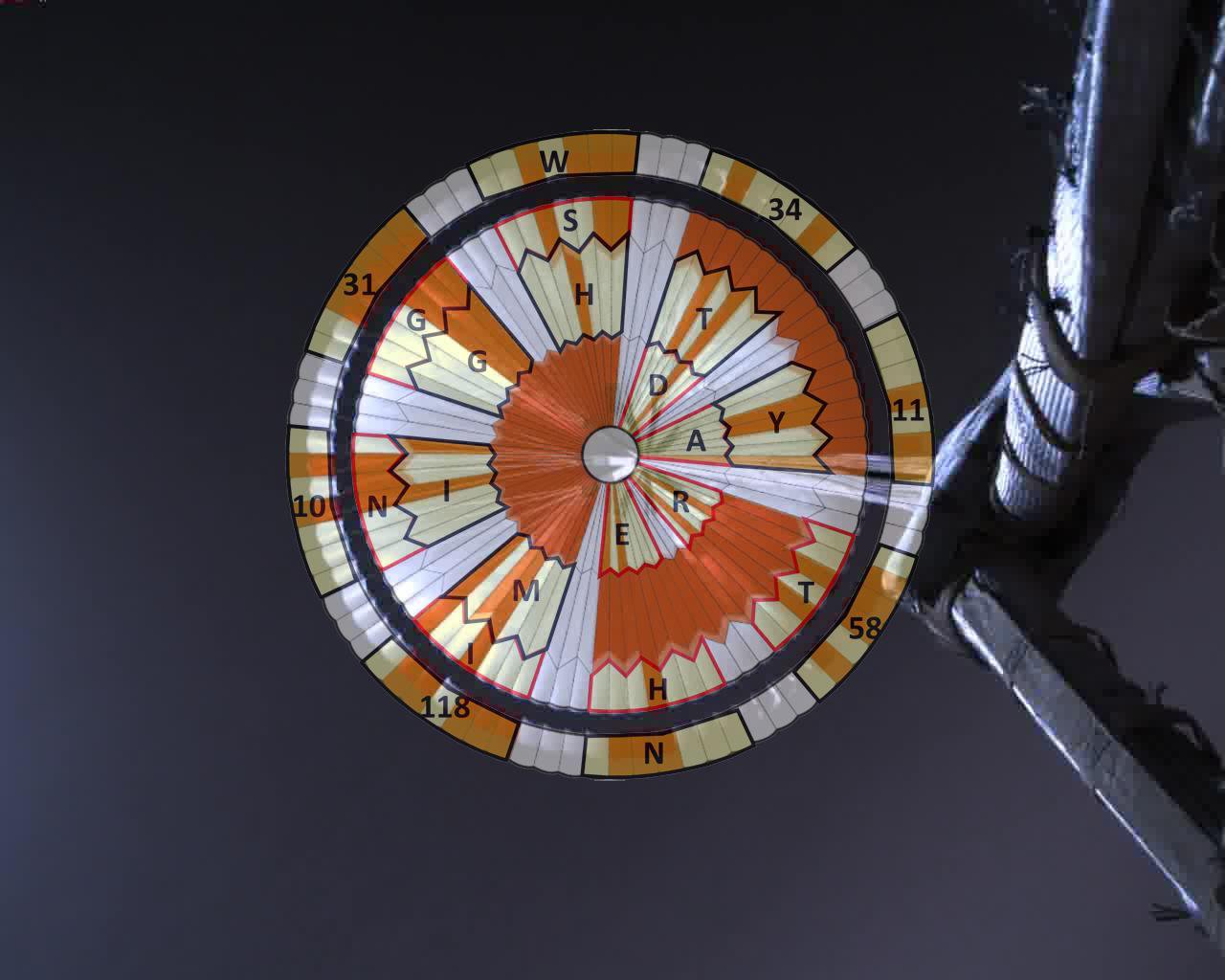
There's a quote etched into the walls of NASA's Jet Propulsion Laboratory that comes from an 1899 speech by Theodore Roosevelt, "Strenuous Life" — a call to Americans to embrace hard work and bold ambition rather than comfort and timidity. He was talking about the value of being in the arena — of daring to try great things rather than standing on the sidelines. The quote ends with these words: "...dare mighty things."
It's a fitting motto for what America has achieved in space over the last 70 years. Because none of it was supposed to be easy, none of it was guaranteed to work. And every mighty bit of it — every rocket, every mission, and every astronaut who strapped themselves into a capsule and let themselves be thrown into the void on millions of pounds of thrust — was a dare.
This is that story. And it isn't over. In fact, it's just getting started.
The Shot That Woke America Up
October 4, 1957
Nobody was ready for it.
On a clear autumn evening, a Soviet rocket punched through the atmosphere and deposited a metal sphere about the size of a beach ball into orbit around Earth. It weighed 184 pounds. It had four radio antennae. It beeped.
That beeping — picked up on ham radios by backyard enthusiasts across the United States — sent a chill through the entire country. The Soviet Union had just beaten America to space. They called it Sputnik, from the Russian word for "traveling companion." But to millions of Americans, it felt more like a threat.
The reaction was immediate and visceral. People actually went outside at night to look for it — a faint, fast-moving dot crossing the sky. It was real. It was up there. And America hadn't put it there.
Congress erupted. President Eisenhower, who had initially tried to downplay the news, now faced a public convinced that if the Soviets could launch a satellite, they could launch a bomb. The Space Race wasn't just about science or exploration. It was about who would dominate the future.
Less than a year later, on July 29, 1958, Eisenhower signed the National Aeronautics and Space Act into law. NASA was born.
Mercury: Seven Men and a Nation Holding Its Breath
1958–1963
NASA's first order of business was simple and terrifying in equal measure: put a human being in space before the Soviets did.
They failed. On April 12, 1961, Soviet cosmonaut Yuri Gagarin became the first person to orbit the Earth, completing a 108-minute flight and landing as a global hero. America had come close — Alan Shepard would fly just 23 days later — but close wasn't first.
What happened next, though, was remarkable. Rather than retreating, America doubled down.
President John F. Kennedy stood before Congress on May 25, 1961, and said something almost no one in the room thought was technically possible: "I believe that this nation should commit itself to achieving the goal, before this decade is out, of landing a man on the Moon and returning him safely to the Earth."
A decade. Today, that seems plenty of time, but they didn't even have reliable rockets yet. And space is hard.
But the Mercury program was building momentum — and more importantly, it was building something else: a connection between the astronauts and the American public that had never existed before with any government program.
Life magazine had secured exclusive rights to the personal stories of the Mercury Seven — John Glenn, Alan Shepard, Gus Grissom, Scott Carpenter, Wally Schirra, Gordon Cooper, and Deke Slayton. Their families, their fears, their church attendance, and barbecues appeared in millions of homes. These weren't just test pilots. They were neighbors. Heroes next door. They were the ones with the Right Stuff.
When John Glenn climbed into Friendship 7 on February 20, 1962, and became the first American to orbit the Earth, an estimated 40 million people watched on television. Ticker-tape parades followed. He addressed a joint session of Congress. Schools let students watch. The country had found its astronauts, and the astronauts had found the country.
Apollo: The Greatest Adventure Humanity Has Ever Attempted
1961–1972
If Mercury introduced America to space, Apollo was the full plunge.
The Apollo program was staggering in scale. At its peak, NASA employed 400,000 people — engineers, mathematicians, machinists, seamstresses who hand-stitched spacesuits, programmers writing code by hand on paper. Computers at the time were large, rare, and slow. It consumed roughly 4% of the entire federal budget. Cities grew up around launch centers. Universities redirected entire departments toward aerospace. A generation of young Americans grew up wanting to be astronauts.
Then came January 27, 1967 — and everything stopped.
During a pre-launch test on the launchpad, a flash fire erupted inside Apollo 1's command module. Astronauts Gus Grissom, Ed White, and Roger Chaffee were killed. The program halted for nearly two years while engineers took the entire spacecraft apart and rebuilt it.
It was a devastating blow. But NASA came back.
Apollo 8, in December 1968, sent three astronauts around the Moon for the first time — and on Christmas Eve, astronaut Bill Anders took a photograph that would become one of the most reproduced images in history: the Earth rising above the lunar surface. Small. Blue. Fragile. Alone. "Earthrise" changed the way humanity saw itself.
Then came July 20, 1969.
An estimated 530 million people — roughly one-sixth of the entire world's population — watched live as Neil Armstrong descended a ladder, stepped onto the lunar surface, and said: "That's one small step for man, one giant leap for mankind."
Let that number sink in. One-sixth of all humans alive on Earth, watching the same thing at the same moment. It remains one of the most-watched events in human history.
Between 1969 and 1972, twelve human beings walked on the Moon across six successful landings. They brought back 842 pounds of lunar rock. They drove a dune buggy. They hit a golf ball. They left a plaque that reads: "We came in peace for all mankind."
And then, with Apollo 17 in December 1972, it was over. Budget cuts. Shifting political priorities. The public's attention had moved on. No human being has set foot on the Moon since.
Apollo's Quiet Finale — The Race Ends with a Handshake in Space
July 1975
Three years after the last Moon landing, Apollo flew one final mission — and this one was different in every way.
The Apollo-Soyuz Test Project brought together American and Soviet spacecraft for the first time, docking in orbit and allowing astronauts and cosmonauts to float through a shared hatchway and shake hands. At the height of Cold War tensions, it was a gesture almost too symbolic to believe. Tom Stafford and Alexei Leonov, men whose countries had spent years aiming missiles at each other, had lunch together 140 miles above the Earth.
It would be more than 20 years before Americans and Russians flew together again. But the seed had been planted.
A New Vision: The Shuttle and the Station
1981–2011 | The Space Shuttle & International Space Station
After Apollo, NASA faced an existential question: what now?
The answer came in two parts, and understanding both requires understanding the moment. The 1970s were a time of economic strain and political cynicism. The grand adventure of Apollo had given way to something more pragmatic — a vision of space not as a frontier to be conquered with heroic one-time missions, but as a place to do regular, repeatable, economical work.
The Space Shuttle was born from that vision. It was the world's first reusable spacecraft — a winged orbiter that would launch like a rocket, work in orbit, and land like a plane. NASA sold it to Congress and the public as a space truck: routine, affordable, reliable. Instead of one-use rockets costing hundreds of millions of dollars, the Shuttle would fly every few weeks, bringing the cost of reaching orbit way down.
The reality was more complicated. The Shuttle was never cheap or routine. But it was extraordinary. Over 30 years and 135 missions, it deployed the Hubble Space Telescope, built the International Space Station, and carried 355 different people into orbit. It made spaceflight feel almost normal — until it reminded us, twice, that it wasn't.
Challenger was lost in January 1986—Columbia in February 2003. Fourteen astronauts died. Both disasters reshaped NASA and forced deep reckonings about safety, institutional culture, and the cost of risk.
The International Space Station began as a geopolitical peace project with a practical mission. After the Soviet Union collapsed in 1991, the new Russian Federation found itself with space engineers with nowhere to go and little money to pay them. The United States had a plan for a large space station, but needed partners. The result was the joining of Cold War rivals and, eventually, 15 nations into the most complex engineering project in human history.
The first module launched in 1998. The first crew arrived in November 2000 — and there has been a continuous human presence in space ever since. Every single day for over two decades, humans have been living and working in orbit.
The ISS wasn't just politically significant. It became a world-class research laboratory, conducting experiments in microgravity that couldn't be done anywhere on Earth — growing crystals, studying how the human body changes in space, testing materials, and yes, printing human tissue in three dimensions.
[→ Dive deeper: Life on the ISS — what it's actually like to live and work in space, and why the research happening there could save your life someday.]
Public reception of the Shuttle and ISS differed from that of Apollo's era. There was no singular moonshot moment to rally around. Interest came in waves — surging after disasters, peaking during dramatic missions like the first Hubble repair. For many young people in the 90s and 2000s, the ISS was background noise: fascinating, but distant. A place where astronauts floated and did science. The bigger cultural reckoning with what it meant was still coming.
The Present: A Space Renaissance Nobody Saw Coming
2010s–Today
Something unexpected happened while NASA was running the Shuttle program. A few people with extraordinary resources and even more extraordinary ambitions decided they wanted in.
In 2002, Elon Musk founded SpaceX with an almost laughably ambitious goal: make humanity multiplanetary. In 2000, Jeff Bezos had quietly founded Blue Origin. These weren't hobbyist rocket enthusiasts — they were building real hardware, hiring real engineers, and aiming directly at capabilities that only governments had ever achieved.
The shift became undeniable on May 30, 2020, when SpaceX's Crew Dragon launched two NASA astronauts to the ISS from American soil for the first time since the Shuttle retired in 2011. For nine years, the United States had been paying Russia to ferry its astronauts to the station. That era was over.
Today, the space landscape is almost unrecognizable compared to what it was even a decade ago. Here's a quick look at what's currently underway:
Artemis Program — NASA's flagship effort to return humans to the Moon, this time to stay. Unlike Apollo, the goal isn't to go, plant a flag, and leave. It's to establish a sustainable presence — a lunar Gateway outpost in orbit, surface bases, and eventually the infrastructure to support longer missions. Artemis III is targeting the first crewed lunar landing since 1972, with the first woman and first person of color set to walk on the Moon. [→ More on Artemis]
Commercial Lunar Payload Services (CLPS) — NASA is contracting private companies to deliver science experiments and technology to the Moon's surface, testing the model that worked for ISS crew transport. Multiple companies are racing to land on the Moon commercially. [→ More on CLPS]
Commercial Low Earth Orbit Destinations (CLD) — The ISS won't last forever. NASA is actively funding private companies to build successor stations in low Earth orbit, planning a managed transition in which the agency becomes a customer rather than an operator. Axiom Space, Blue Origin, and others are competing to build the next generation of space stations. [→ More on CLD]
SpaceX Starship — The largest rocket ever built. Still in testing, but designed to carry humans to the Moon and, eventually, to Mars. When it operates at full capacity, it will be capable of putting more mass into orbit than all other rockets in history combined. [→ More on Starship]
Lunar Gateway — An outpost that will orbit the Moon, serving as a staging point for lunar surface missions, deep space research, and eventually missions further out in the solar system. International partners are building modules as we speak. [→ More on Lunar Gateway]
NASA's Science Missions — Alongside the human spaceflight programs, robotic missions continue to push the boundaries: the James Webb Space Telescope is rewriting our understanding of the early universe; the Perseverance rover is actively searching for signs of ancient life on Mars; the Europa Clipper is on its way to Jupiter's moon, one of the most likely places in our solar system to harbor life. [→ More on NASA Science]
The Precipice
Here's what's easy to miss when you're living through a historic moment: you don't always know it's historic.
People who watched Apollo 11 live on black-and-white TV knew they were watching something extraordinary. What they didn't know was that it would be 50+ years before humans returned to the Moon — or that the next chapter would involve not just governments, but private companies racing each other to build lunar landers, orbital hotels, and Mars-capable rockets.
We are at a moment that future generations will read about the way we read about the Wright Brothers or the Mercury Seven. The next decade will see more humans in space than at any point in history. Commercial stations. Lunar bases. Possibly the first humans on Mars within a generation. The economic activity surrounding space — satellite internet, lunar resources, space tourism — is projected to become a multi-trillion-dollar industry.
The dare that Theodore Roosevelt described wasn't about being reckless. It was about refusing to sit in the stands when a game that actually matters is being played.
Humanity is going back to the Moon. And this time, we're going to stay.
The question isn't whether this will be one of the most consequential chapters in human history.
The question is whether you'll be paying attention when it happens.
This article is part of the Dare Mighty Things series. Continue exploring:
[→ Life on the International Space Station — 25 Years of Humans in Orbit]
[→ Artemis: Why We're Going Back to the Moon]
[→ The Private Space Race: SpaceX, Blue Origin, and the New Frontier]
[→ What's Being Discovered Right Now in Space]
[→ Could Humans Really Live on Mars?]
[→ Mercury Program
[→ Apollo Program
[→ Sputnik and the Russian Program
[→ The Space Shuttle Program
(2020). Today is Monday, May 25, the 146th day of 2020. There are 220 days left in the year. This is Memorial Day. Florida Times Union, (), 1.