Flight 93: Twenty Minutes From Washington
A delayed takeoff gave forty people the one thing nobody else in the air that morning had — time to find out what was happening.
United Airlines Flight 93 was supposed to leave Newark at eight o'clock. Morning traffic held it on the ground for forty-two minutes, and it lifted off at 8:42 bound for San Francisco with thirty-three passengers and seven crew aboard.
That delay is a bigger story than it seems. The other three hijacked aircraft were taken before anyone knew or could have imagined their intended use. By the time anyone moved on Flight 93, two towers were burning, and the news was everywhere.
At 9:24, a United dispatcher sent the cockpit a text warning: beware any cockpit intrusion, two aircraft have hit the World Trade Center. The pilots read it and asked for confirmation, which tells you how impossible it sounded. Flight 93 was the only one of the four to get any warning at all.
Four minutes later, the hijackers came through the door.
What they learned
The plane turned southeast. The hijackers pushed the passengers and crew to the back of the cabin, told them a bomb was aboard, and ordered them to stay quiet.
They did anything but stay quiet. Over the next half hour, thirty-seven calls went out from the airphones and cell phones in the back of that airplane — to wives, husbands, mothers, and to operators who had no idea what they were about to be part of.
And the calls came back. Two planes into the World Trade Center. A third into the Pentagon. Their own aircraft turned toward the capital.
They were not hostages for a negotiation. They were cargo on a weapon.
The vote
They talked it over, and they took a vote. A group of strangers, in the back of a narrow cabin, at nine in the morning, decided by show of hands to storm the cockpit of a Boeing 757 in flight. It is easy, especially in hindsight, to judge it as a rather straightforward decision. But make no mistake about it. From 20,000 ft, with very little and unverified information about what was happening outside that pane, it was hardly an easy one.
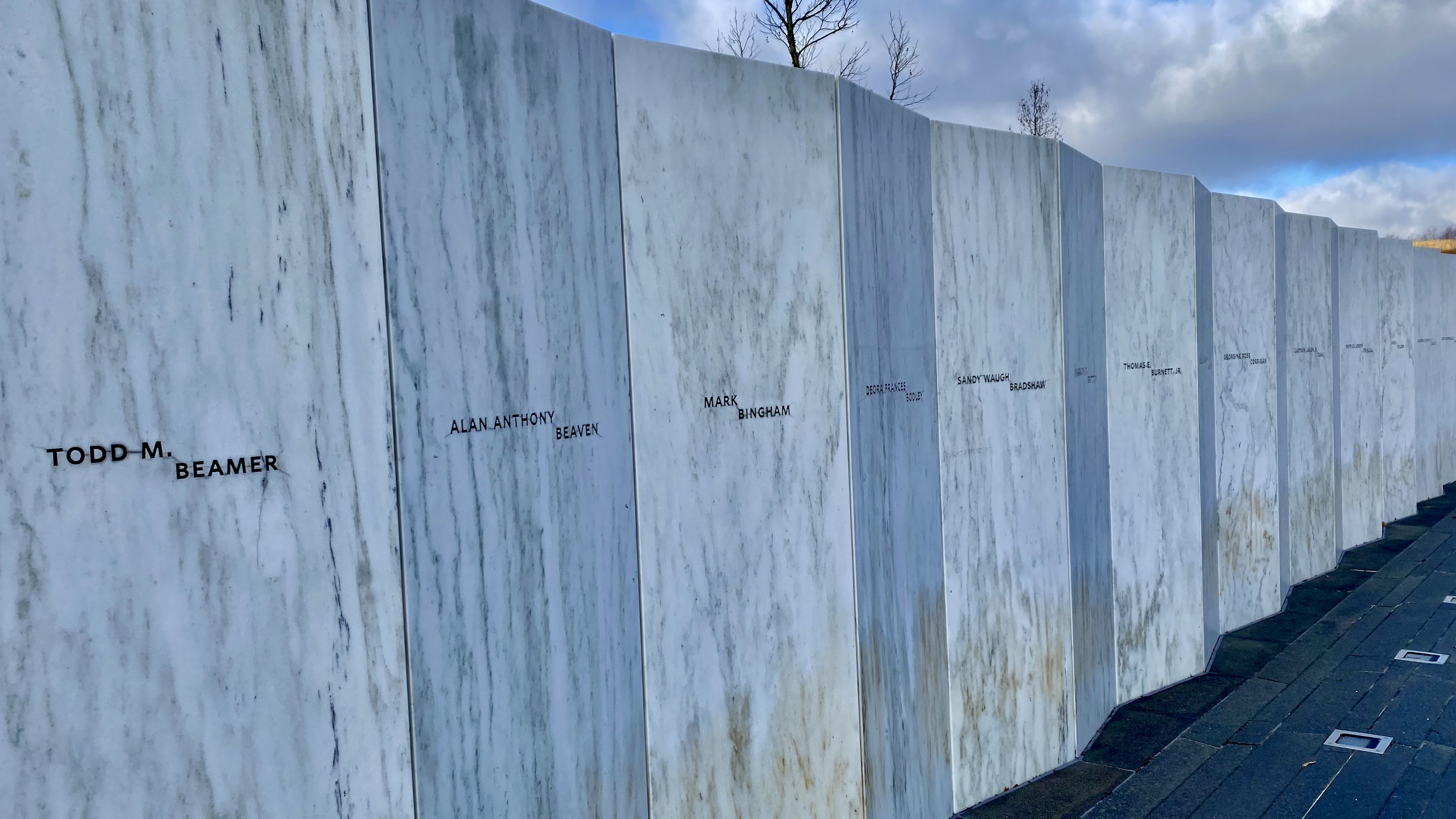
Among them: William Cashman, a retired ironworker. CeeCee Lyles, a flight attendant who had been a police officer prior to that. Todd Beamer, who sold software. Mark Bingham. Tom Burnett. People whose ordinary Tuesday had been a business trip.
Beamer never got a call through to his family. He reached a GTE Airfone supervisor named Lisa Jefferson and stayed on the line with her for about thirteen minutes. They prayed the Lord's Prayer together. They prayed Psalm 23. Then Jefferson heard him turn away from the phone and say something to the effect of, "Are you ready? Okay. Let's roll.”
Those words come to us through Jefferson alone. The call was never recorded. She reported it to her supervisors as soon as it ended and repeated it to Beamer's wife days later, and the 9/11 Commission Report cited her account; she told it in full in her 2006 book, Called. Everything anyone knows about Todd Beamer's last minutes rests on the memory of a phone supervisor outside Chicago who heard a man she had never met decide to die well.
What actually happened next
At 9:57, they went up the aisle.
The cockpit voice recorder caught the rest — shouting, crashing, the hijackers yelling at each other to hold the door. Ziad Jarrah rolled the aircraft hard left and right to throw them off their feet, then pitched it up and down when rolling didn't work. It did not stop them either.
At 10:02, a hijacker can be heard shouting to put it down.
Flight 93 hit an empty field outside Shanksville at 10:03, at 563 miles an hour.
They did what they set out to do. Of the four aircraft hijacked that morning, Flight 93 is the only one that never reached its target, and the reason is the forty people in the back of the cabin. They forced that plane into the ground 128 miles short of its intended target.
The 9/11 Commission examined the cockpit recorder and the flight data and found that the passengers did not make it through the cockpit door. The hijackers held the controls to the end and put the plane down because they judged the passengers were seconds away from taking it.
The revolt is what put Flight 93 in that field. The hijackers, who had spent years planning this, had to settle for Pennsylvania farmland instead. It is hard to call that a victory for the men and women aboard Flight 93, but whether you call them victorious or not, nobody can say they are not heroes. The Commission concluded that their struggle saved countless lives and may have saved either the Capitol or the White House.
The field
Today, a wall at the Flight 93 National Memorial lists all forty names. A sandstone boulder marks the edge of the impact site, and the field past it is left alone.
The thing worth carrying out of that field is not that they were exceptional people. They were a retired ironworker, a software salesman, and a flight attendant. The thing worth carrying is that they had about thirty minutes' notice, no authority, no weapons, and no guarantee, and they went anyway — and that one of them spent his last minutes praying the Twenty-third Psalm with a stranger on a telephone before he stood up.
Though I walk through the valley of the shadow of death, I will fear no evil.
Said out loud, from 20,000 ft, with the answer already in view.
We will never forget.