Starship Flight 13
Soft Splashdown, Intact Heatshield, and First Starlink V3 Deployment
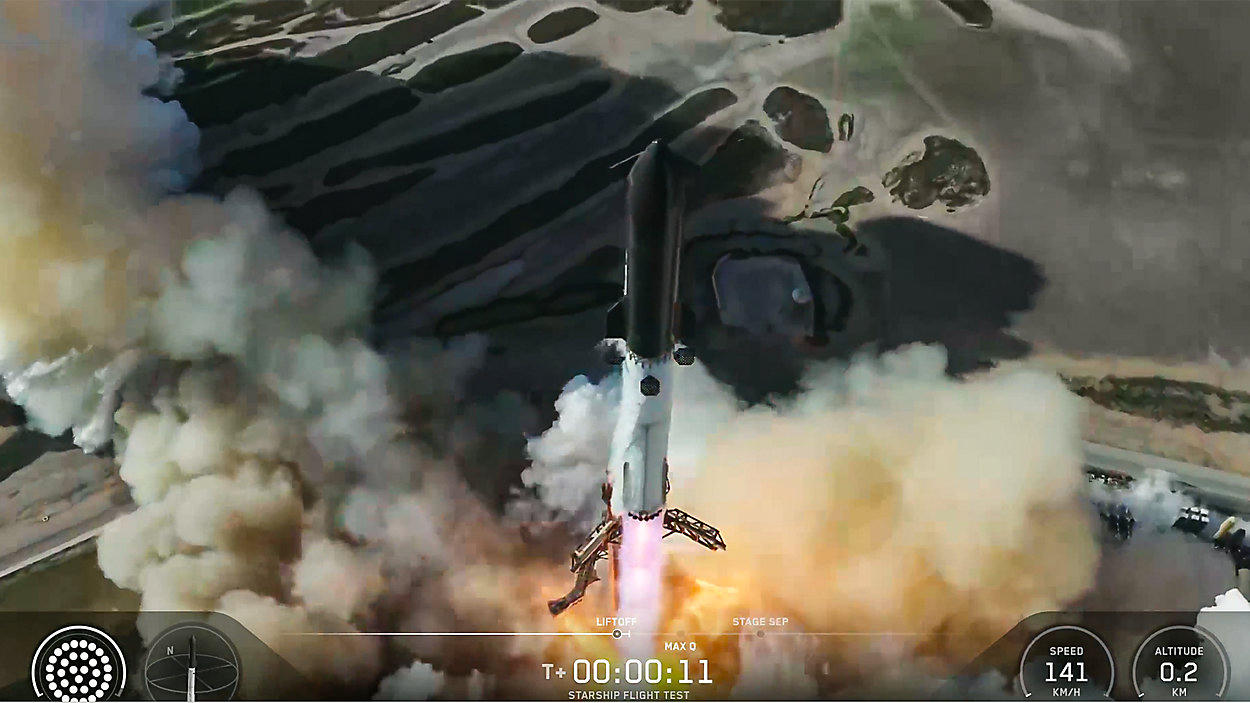
On Friday evening, July 24, Starship launched from the Texas coast again. At 5:51 p.m. CT, it took off from Starbase for its thirteenth flight test—the second for the upgraded Version 3 hardware. This flight was a measured success, providing valuable data that advances reliable space access and better connectivity.
The Super Heavy booster ignited all 33 Raptor 3 engines and climbed smoothly. After a successful hot-staging separation, it completed the boostback burn with every engine firing—an improvement from the last V3 flight. However, during the landing burn, only some engines ignited. The booster had a hard splashdown in the Gulf of Mexico. Engineers will review the data closely. A soft, controlled recovery of the booster is still a goal.
The Ship upper stage carried higher expectations this time, and it delivered. After a full-duration ascent burn with all six Raptor engines, it reached its planned trajectory and speed. It then deployed all 20 operational Starlink V3 satellites—the first functioning next-gen Starlink spacecraft flown on Starship.
SpaceX reported that engineers contacted each satellite via radio-frequency and laser links, downloading key telemetry. The satellites followed their planned path and were set to reenter about 20 minutes post-deployment. For a brief period, they showcased the hardware and communications setup that will enhance capacity and speed across the network.
The ship also performed a successful single-engine relight in space, a vital ability for future missions. During reentry, it collected crucial data on heatshield performance and executed a dynamic banking maneuver to simulate future return trajectories. Using its four flaps, Starship guided itself to a pre-planned zone in the Indian Ocean.
There, the vehicle ignited all three Raptor engines, completed a landing flip and burn, and achieved what SpaceX called its softest splashdown yet. The ship rested intact on the water, providing the first clear views of an unbroken heatshield after reentry and landing. That image of the vehicle floating instead of breaking apart is a milestone.
These results indicate that work is ongoing. The booster’s hard splashdown shows that engine restart reliability and propellant management need improvement. The program will keep its iterative approach: fly, gather data, adjust, and fly again. This disciplined process has already turned earlier issues into the cleaner ascent and performance seen on Flight 13.
American engineering continues to push boundaries in a measured, transparent way. Flight 13 didn’t meet every goal perfectly. Still, it achieved the most important ones for the next development phase: a clean ascent, successful satellite deployment and contact, an in-space engine relight, controlled reentry with valuable heatshield data, and a soft splashdown. These are the building blocks for routine, reliable space access.
The data from this flight will inform the next vehicle and test. Progress is usually steady and cumulative, not dramatic. Flight 13 added significantly to that progress.