The Boat Lift: When the Harbor Answered
Lower Manhattan became an island with no way off. Roughly 150 boats and 800 mariners moved half a million people in nine hours.
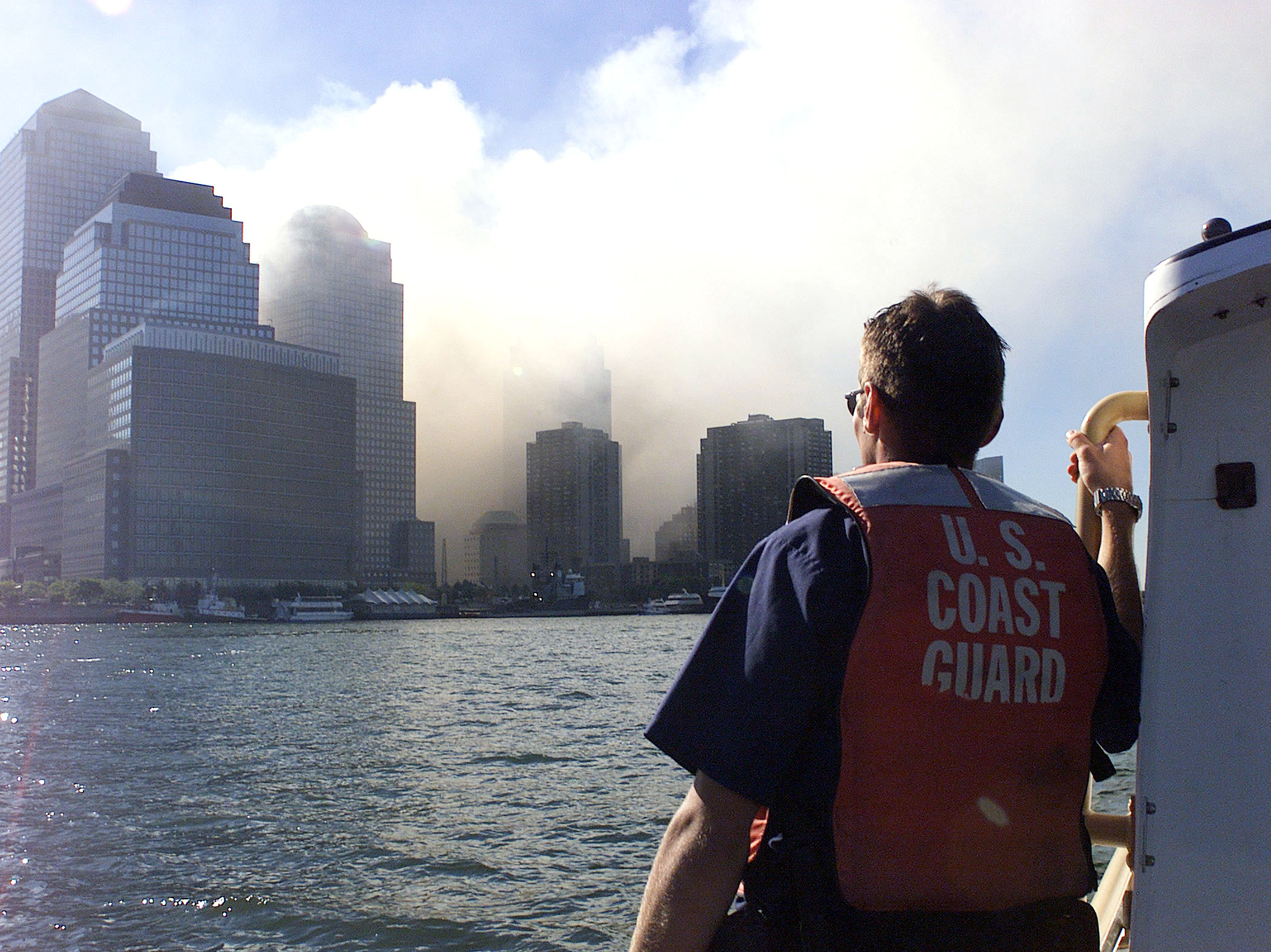
By mid-morning on September 11, 2001, there was no way out of Lower Manhattan by land. The bridges were closed. The tunnels were closed. The subways were stopped. Tens of thousands of people walked south ahead of the smoke until they ran out of island, and then they stood at the seawalls with the water in front of them and the dust behind them.
The Coast Guard put out a call on marine radio: all available boats.
No emergency plan existed for evacuating Manhattan by water. No playbook for it, no chain of command built for it, no drill anyone had ever run. Instead, commercial mariners who heard the call turned their vessels toward the smoke, because that is what mariners do when someone is stranded on a shore.
What came
Ferries came. NY Waterway ran its commuter boats until the crews lost count of the trips. The Staten Island Ferry ran. Tugboats from Moran and McAllister, built to push barges and never designed to take on passengers, nosed their bows against raw stone bulkheads and held position while people climbed aboard over the rail. Sightseeing boats came. Dinner-cruise boats came. Fireboats, police launches, Army Corps patrol boats, private craft whose owners simply pointed them downriver.
About 150 vessels in all. Around 800 professional mariners.
One instruction from the Coast Guard tells you most of what you need to know about that morning: load what is safe for your vessel, not what your vessel is licensed to carry. Every captain out there was asked to set aside the rulebook that protects his license and do it on the judgment of his own eyes, repeatedly, for hours.
They did it. Boats that were certified for 150 took on far more. Crews who had never trained for disaster response pulled people out of the crowd, then turned around and went back.
The number
In roughly nine hours, that fleet carried an estimated 500,000 people off the island.
The comparison people reach for is Dunkirk, and it holds. Dunkirk moved about 338,000 over nine days, under a military command, with the Royal Navy organizing it. The 9/11 boat lift moved more than that in a single working day, and it started before anyone was organizing anything.
It is the largest waterborne evacuation in history. Almost none of the people who carried it out were first responders. They were working men and women with licenses, mortgages, and a job that happened to put them on the water that morning.
The same instinct, further inland
The impulse that filled the harbor filled the rest of the country too, and it is worth telling that part honestly.
Americans lined up to give blood. Lines ran for hours. Centers stayed open overnight. The surge added roughly half a million units to what the country collected that year.
Almost none of it was needed.
There were very few wounded. The towers produced many dead, a few survivors, and not much in between. The donated blood sat, and its shelf life is forty-two days, and by December the Red Cross had to destroy donations from nearly 50,000 people because no hospital needed them.
That fact gets left out of most tellings, and it shouldn't. It is not an embarrassment. It is the most human thing in the whole account. Half a million people stood in line for hours to give the one thing they had that might keep a stranger alive. Unfortunately, there was hardly anyone left to save. The instinct was right, the need just never materialized. What stands out is that it wasn't a large, organized effort. People from across the country came together and found any way they could to help.
What it tells us
That day's response wasn't coordinated from the top, and what worked best was neighbor helping neighbor.
Scripture does not treat that as an accident. The neighbor in the parable is not the man who had a plan; he is the one who was going down the road anyway and stopped. Character is not what we intend to do in a crisis. It is doing what needs to be done before anybody even says a word.
On September 11, a few hundred people in the New York harbor showed what character is, and so did half a million standing in blood-donation lines in towns that had never seen smoke on the skyline.
We remember the 2,977 who were killed. We remember the families and first responders still carrying it twenty-five years later. And we remember the captains, the deckhands, and the ordinary people who were never issued a badge and stepped forward anyway.
When the land routes failed, the harbor answered.
We will never forget.