The Ground Zero Cross
A Sign That Stood in the Rubble
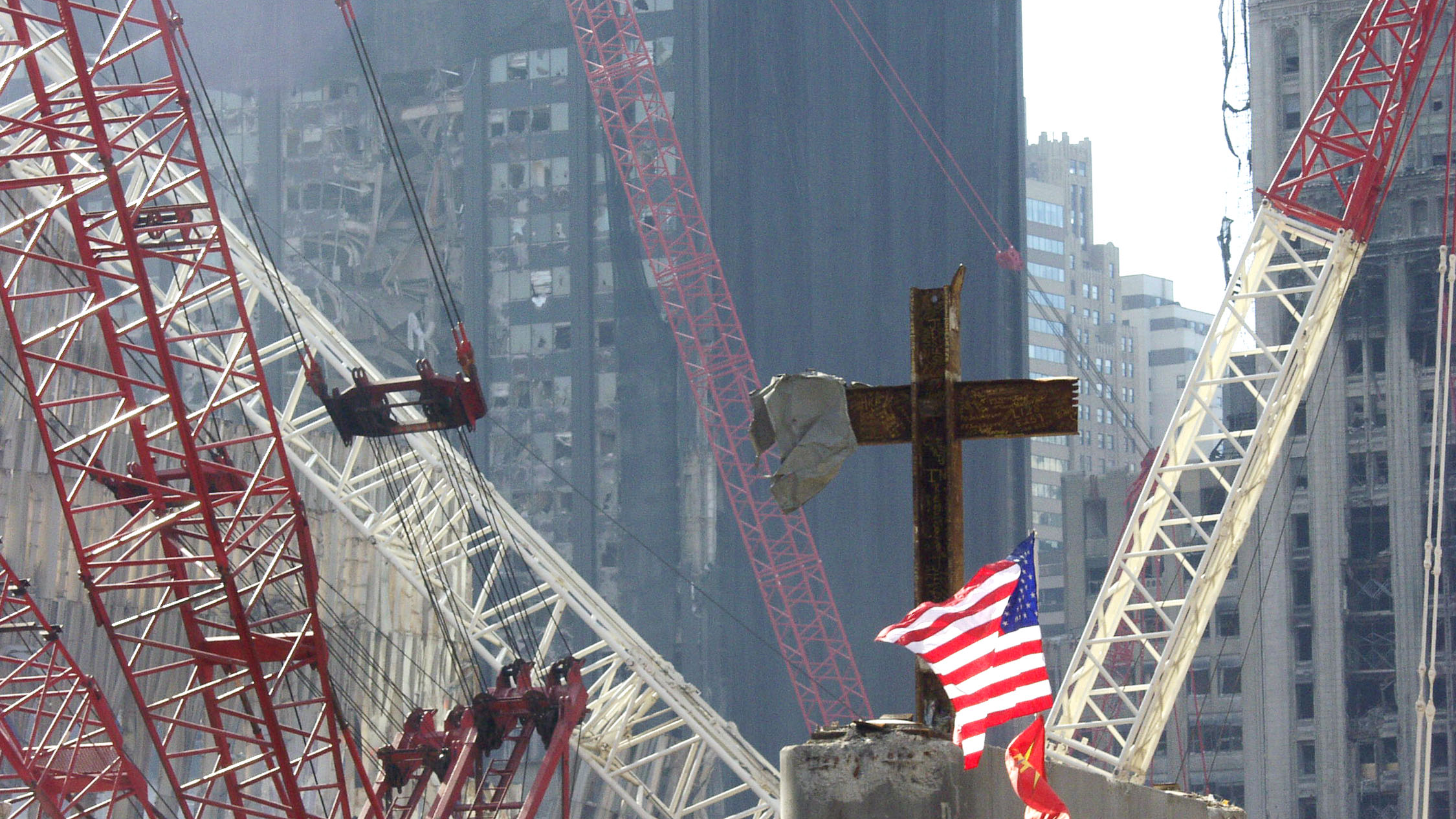
In the days after September 11, 2001, Ground Zero was a pile of ash, twisted steel, and unimaginable loss. Rescue crews dug for survivors. Families waited by phones that wouldn't ring. And in the middle of it, workers found something that stopped them where they stood.
On September 13, a construction worker named Frank Silecchia was clearing debris in the ruins of 6 World Trade Center when he looked up and saw two steel beams, still joined, standing upright in the shape of a cross. They had been part of the towers before the collapse threw them down and left them here — about 17 feet tall, plain against the gray backdrop of destruction.
Word of it spread among the crews. About ten days later, Father Brian Jordan — a Franciscan priest who had been saying Mass and ministering to workers at the site — came to see it for himself. When he saw it, he fell to his knees. He would spend the next thirteen years as its keeper and defender.
They cleaned the beams and raised them onto a base at the edge of the recovery site. On October 4, 2001 — the feast day of St. Francis of Assisi — Father Jordan blessed the cross in a simple ceremony. From then on, men and women coming off long shifts on the pile would stop there. Some prayed. Some just stood. More than a few said it gave them the strength to go back in.
It was never billed as a miracle, and it didn't need to be. It was steel, fabricated years earlier, held together by bolts and welds. What gave it weight was where it stood and when. In a landscape of broken buildings and broken lives, it reminded us that faith does not vanish when the worst arrives.
For years the cross stayed near Ground Zero. It was moved a short way as the work went on, then stood at St. Peter's Church, just across from the site. In July 2011, they lowered it into the new 9/11 Memorial Museum, where it remains today—the same beams, the same shape, now permanent.
Visitors still stop in front of it. Some leave notes. Some only look. The cross does not explain the attacks or lift the grief of the families who lost husbands, wives, children, and parents that morning. It does something quieter. It stands as proof that even in the darkest hour, a sign of hope and faith can rise from the rubble.
For many who lived through those weeks, it became a fixed point — the place where ordinary people kept working when the work was almost unbearable, where a priest blessed steel and asked God to strengthen the living. It still marks a plain truth: faith, family, and the will to endure were not buried on September 11.
We remember the nearly 2,977 lives taken that day, and both the families and responders who still carry the weight of it. And we remember the cross that stood in the ruins — not as the final answer, but as a sign that the light of faith can still be found in the darkest places.
We will never forget.