The Irkutsk Denial: A Plague Death, a Closed Lab, and Russia’s Old Bioweapons Habit
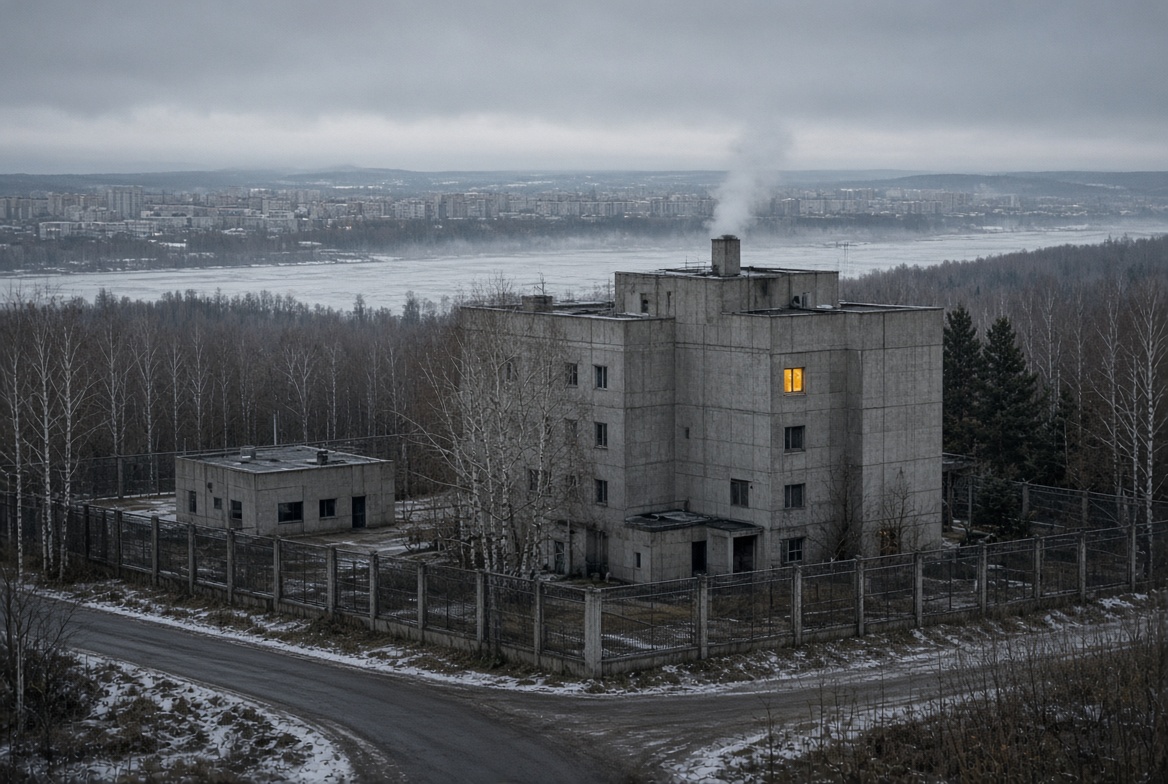
A lab worker at a Russian plague institute is dead, Moscow says it was not the plague, and the country’s bioweapons record is why almost nobody is taking that at face value.
What is known is narrow, in late September 2026 a technician at the Irkutsk Anti-Plague Research Institute of Siberia and the Far East died after what Russian outlets first described as a lab accident. Social media turned that into a broken flask, pneumonic plague, and hundreds of infections. Rospotrebnadzor, the federal health watchdog, later said two reviews found no evidence of an accident involving pathogenic microorganisms, tests found no organism tied to her work, and the cause of death was pneumonia of unknown origin. The World Health Organization has said no cause of death is officially confirmed and that the risk to the general public looks low on the information available. Quarantine figures circulating online are not independently confirmed.
That is not the same as a closed case. Irkutsk has studied plague since 1934. It still publishes on regional strains and plague vaccination. Historically, the Soviet anti-plague system supplied virulent strains to Biopreparat, the civilian front for the offensive program, and to military labs. Researchers who have looked at the institute say only a small share of its old work was weapons-related. There is no public evidence that Irkutsk is a bioweapons site today. Russia says its military biological work is defensive.
The reason the denial landed badly is the last time Moscow used this script. On April 2, 1979, anthrax spores escaped Compound 19 in Sverdlovsk, now Yekaterinburg, after a filter failed on a drying line used to produce dry spores. At least 66 people died of inhalation anthrax, with animal deaths farther downwind. Soviet authorities blamed contaminated meat. Boris Yeltsin later said the military program caused it. Genome work on autopsy tissue confirmed anthrax and did not show antibiotic- or vaccine-resistant engineering. The cover story was the tell.
The U.S. State Department’s compliance reports have kept concluding that Russia still has an offensive biological weapons program, in violation of the 1972 Biological Weapons Convention. The 2026 U.S. threat assessment says Russian scientists are still developing chemical and biological capabilities and that dual-use work raises the chance of an accidental release. Satellite imagery reported by the Washington Post in 2024 showed roughly ten new buildings, more than 250,000 square feet, at Sergiev Posad-6, a military site outside Moscow with a Cold War record of work on smallpox, Ebola, and hemorrhagic fevers. Russian officials say the new labs will study pathogens such as Ebola for defense against terrorism and pandemics. Separate reporting this year tied a closed facility on Lisy Island to institutes the United States has sanctioned over biological and chemical work. Ukraine’s military intelligence claims offensive pathogen work there. That claim is not independently verified.
Speculation, labeled as speculation: a broken vial of ordinary plague at a civilian anti-plague institute is the boring explanation, and it still fits the public facts better than a weapon. Pneumonic plague is a known occupational risk in exactly these labs, and a single death plus an official blackout is what a nervous bureaucracy produces even when the agent is a natural strain.
The weapons version requires extra assumptions. One is that Irkutsk was holding or passaging a military strain, not a surveillance isolate from Tuva or the local reservoir. Another is that the pneumonia was a modified agent and the “unknown etiology” line is doing the same job the meat story did in 1979. A third is that security-service escorts and hospital lockdowns, reported but unconfirmed, mean containment of something other than a lab infection. None of that is shown. What the record does support is motive and capacity. The Soviet program weaponized plague, anthrax, smallpox, tularemia, Marburg, and others. A state that kept the program, expanded high-containment military labs after 2022, and used Novichok abroad does not get the benefit of the doubt when a plague technician dies and the samples disappear into a commission it controls.
The useful distinction is between a leak and a weapon. A leak can be a natural strain in a public-health lab. A weapon is engineered or produced at scale for delivery. Irkutsk, on current evidence, is a candidate for the first. Sergiev Posad-6 and the closed military sites are the candidates for the second. Mixing them is how this story turns into fiction. The part that is not fiction is the secrecy. A country with a proven anthrax cover-up and an assessed offensive program does not get to close a plague death with a press release.