The Pentagon: What Held
One hundred eighty-four people were killed when Flight 77 struck the west wall. The reason it was not far worse comes down to a construction schedule.
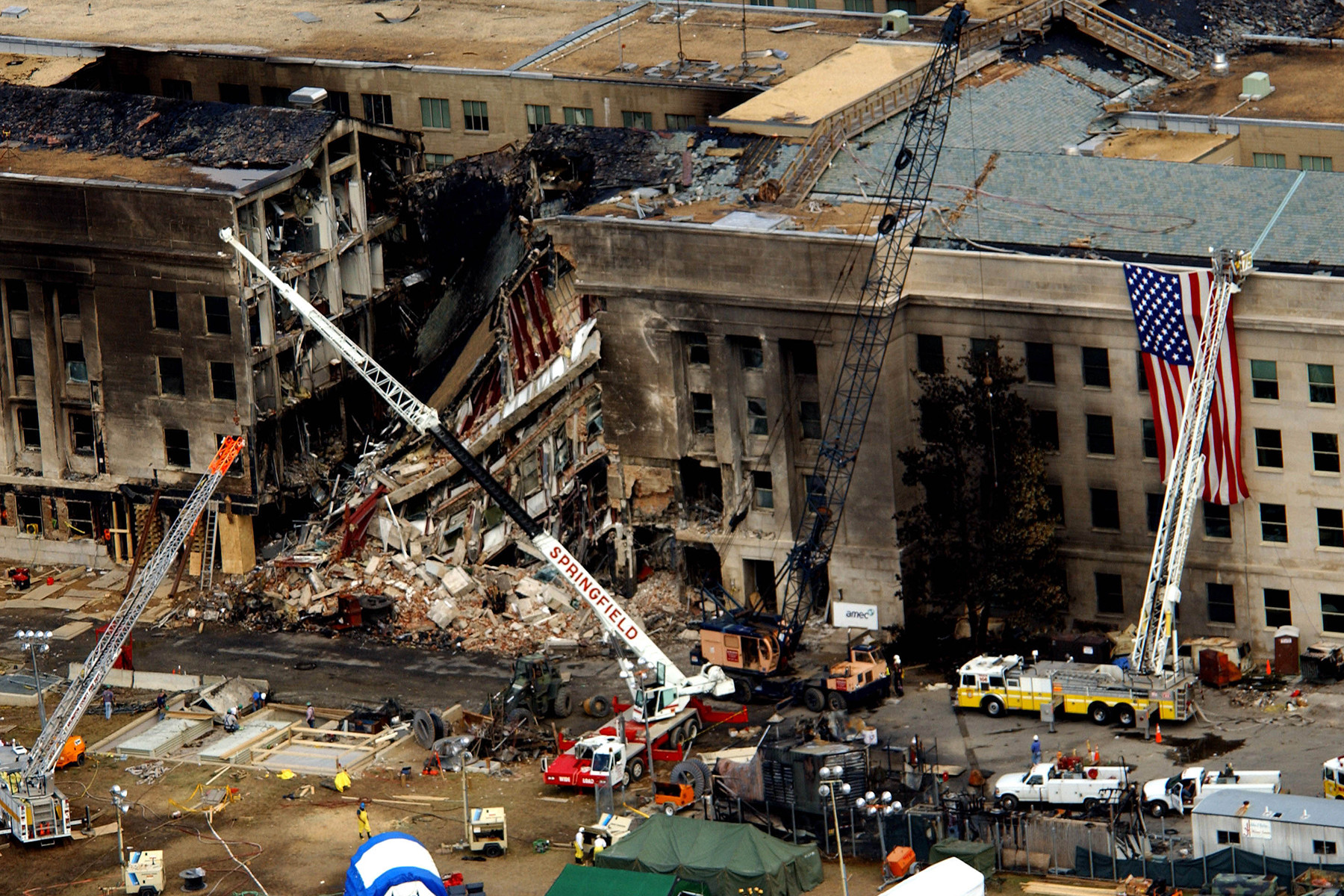
At 9:37 a.m. on September 11, 2001, American Airlines Flight 77 struck the western face of the Pentagon at ground level, traveling somewhere around 500 miles an hour with most of its fuel still in the wings.
One hundred twenty-five people inside the building were killed. Fifty-nine passengers and crew aboard the aircraft were killed. That is 184 victims.
The wedge
The Pentagon was sixty years old that September and was being rebuilt one wedge at a time. Wedge 1 had just come out of a three-year, $258 million renovation. The work included steel reinforcement, Kevlar cloth lining behind the walls, blast-resistant windows, and a new sprinkler system.
Flight 77 hit Wedge 1.
The reinforced facade held for roughly twenty minutes before it came down. The floors above the impact stayed suspended in the air for something close to thirty-five minutes. In that window, hundreds of people walked, crawled out, or were carried out of a building that by any reasonable expectation should have already fallen on them.
There is a second part to that. The renovated wedge was still mostly empty. Reoccupation had barely begun. A section of the Pentagon that on an ordinary Tuesday would have held thousands of people held a few hundred when the plane came through the wall.
The engineering saved lives, but so did the calendar. The hijackers chose a target and hit the one part of it that had just been hardened and had not yet filled back up. Call that what you will. It was not by their design for sure.
Inside
What the building bought, although short, was time. What people did with it was their own.
Survivors of the initial impact went back into smoke to pull colleagues out. They carried the wounded down corridors they could not see through. They fought fire with extinguishers and coats until the crews arrived. Most of them were not first responders. They were budget analysts, clerks, and officers who worked at desks.
Outside, firefighters from Fort Myer, Arlington County, and Reagan National arrived within minutes. Crash trucks poured foam on a jet-fuel fire. Military and civilian personnel formed lines to move the injured across the lawn. Part of the E Ring collapsed later that morning, but by then most of the people who could be gotten out had been.
What came after
The Pentagon Renovation office launched what it named the Phoenix Project on October 18, five weeks after the attack. They demolished the destroyed sections, rebuilt them, and put them back in use in under a year.
That is a remarkable number. It was not a public-relations exercise. The building is a workplace. Rebuilding it fast meant the people who had run out of it in September could walk back in, and the work of defending the country could continue in the same rooms where colleagues had died.
What it asks of us
We have a habit of describing a building as resilient, as though the concrete had a character. It does not. Steel and Kevlar are just steel and Kevlar. What they did on September 11 was buy thirty-five minutes.
The character belonged to the people who spent those minutes going back in.
Scripture puts it about as simply as it can be put. "Greater love hath no man than this, that a man lay down his life for his friends" (John 15:13). On that morning, in that building, a fair number of ordinary federal employees had roughly half an hour to decide whether they believed that. Many of them proved they did and braved the smoke as proof.
We remember the 184 who were killed at the Pentagon and aboard Flight 77. We remember the families still carrying it twenty-five years on. And we remember that the heart of American defense turned out to be, that morning, exactly what it is supposed to be: people.
We will never forget.