What the FLOCK?!?
What the Flock
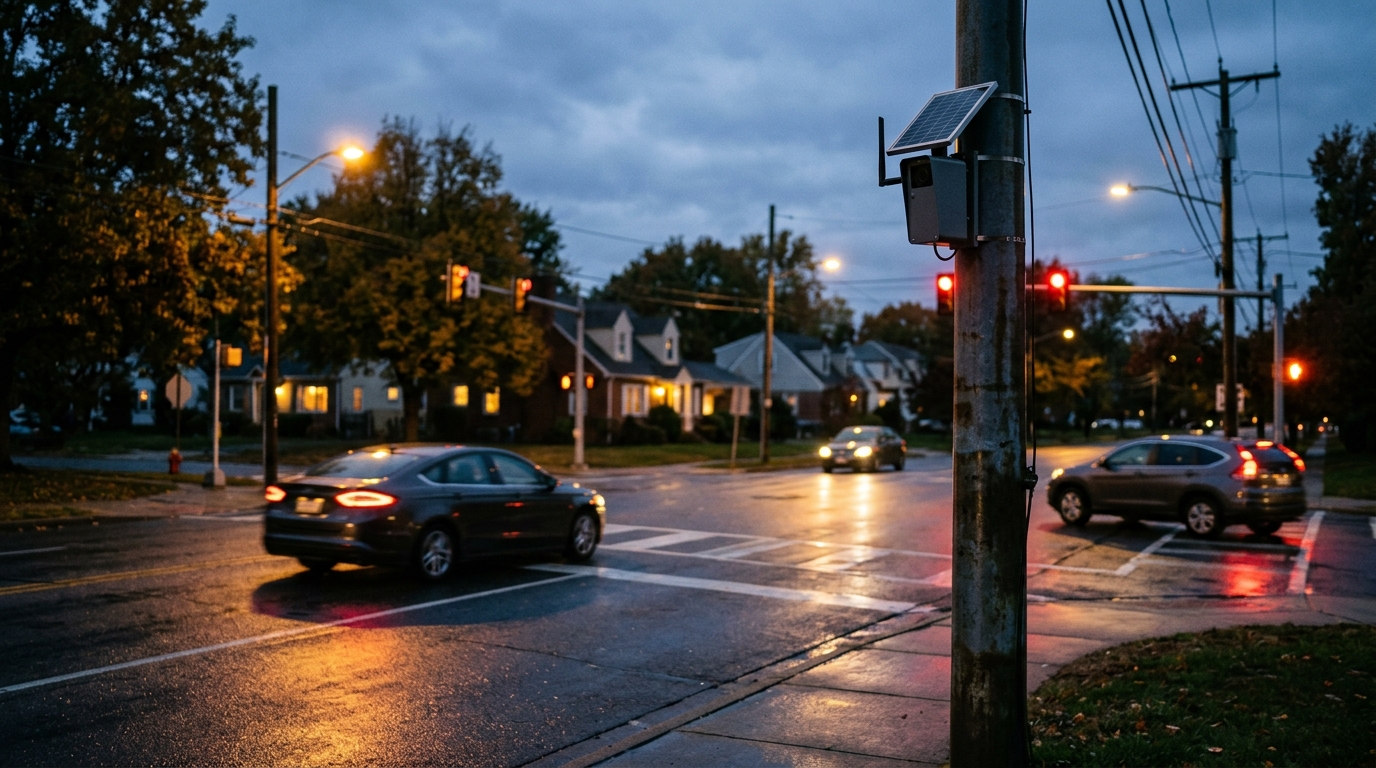
You’ve probably driven past one and never clocked it. Small solar box on a pole. Intersection, neighborhood entrance, shopping center lot. Looks like nothing in fact it is not nothing.
Flock cameras are license plate readers from an Atlanta company called Flock Safety. A car goes by, the camera fires off a handful of stills, and software pulls the plate plus whatever else it can see from, make, model, color, dents, roof rack, bumper sticker, direction. Time and place get attached. That record sits in a cloud database police can search later or get pinged on in real time if the plate is on a hot lists such as a stolen car, missing person, wanted vehicle. Flock says it does not do facial recognition. The pitch is: we track cars, not people.
The company started in 2017 and by this year there were well over 100,000 of these things in the country, with some counts putting it near 120,000, in thousands of towns, plus HOAs, campuses, and businesses. Tens of billions of scans a month, if you believe the scale numbers floating around. Default retention used to be about 30 days, but after the blowback, Flock started talking about a shorter default. Local agencies own their data, on paper. A lot of them flip on “national lookup,” which means an officer two states away can query cameras your city paid for.
Cops like them because a shooting car or a kidnapped kid’s vehicle can light up the next camera instead of vanishing into traffic. Routes get rebuilt without a witness. Departments will tell you about recovered cars and closed cases and to be fair courts have mostly treated a fixed camera on a public road as looking at something already in public. Flock leans on that, that’s the brochure.
Here’s why people are angry
One camera is a snapshot, but a few thousand of them, all searchable from one box, is a diary of where you went. Work, church, clinic, protest, your sister’s house. Groups like the ACLU and EFF call that mass surveillance because the camera does not wait for a crime, it logs everybody. A judge in Norfolk, Virginia put it about as honestly as courts have: this might become an unconstitutional dragnet someday. Not today, he said. “Not today” is doing a lot of work.
Flock says it has no ICE contract and cities control sharing. But then you read the audits. Local departments ran immigration related searches happen anyway. Border Patrol got in through local partners. Cities found a “national lookup” on when they thought it was off. School police officers ran plates to check whether kids actually lived in the district. Once the pile exists, “we don’t share with federal agencies” is a press line, not a lock. That is why dozens of places paused the cameras, bagged the lenses, or ripped up the contract.
Then there is the human part. Journalists who pulled search logs found officers running plates on girlfriends, exes, people they were curious about. A Texas deputy used the network on a woman suspected of ending a pregnancy out of state. The software also gets plates wrong. Roseville, California had a ugly miss rate on stolen car and felony alerts. In Toledo a man got mauled by a police dog after a camera read a 7 as a 2. A hit feels like proof even though sometimes it is just a bad read.
Researchers have also found Flock gear sitting open on the internet. And even if the search screen is built around plates, the photos still catch drivers, passengers, people on the sidewalk. Flock’s answer is still: we don’t ID faces. The worry is not the slogan, it is location history plus whoever is allowed to type in the box.
This fight is not cleanly left or right
City councils have heard from privacy people and from conservatives who do not want a vendor building a national trip log. Some towns canceled. Some people have cut poles down or shot the units, which is still a crime and also a measure of how raw this got. Texas moved to choke off state money. Florida’s DOT yanked ALPR permits on state highways. Flock rolled out more audits and tighter defaults. That is what companies do after the story is already out.
Can the cameras help catch a killer or find a stolen truck? Yes. That was never the whole question. The question is who gets to search a record of almost every car on almost every road, for what reason, with what warrant, for how long and whether a private company’s national lookup should exist in the first place.
Until that is settled in public, that little box on the pole is both a crime tool and a warrantless map of your week. Call it whichever one you prefer. It is still the same camera.